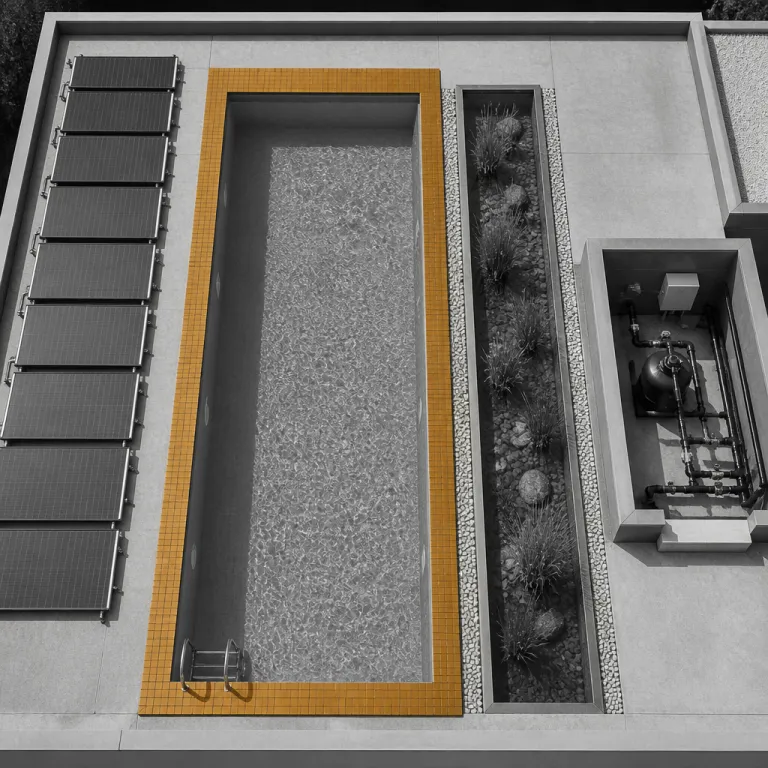
Why the eco-friendly luxury hotel pool now matters more than the lobby
The most memorable luxury swim is no longer just about the infinity edge. Today the true eco friendly luxury hotel pool balances spectacle with restraint, using less water and energy while still feeling indulgent. For families choosing a hotel, the pool’s sustainability profile is now as important as the number of rooms or the spa menu.
Behind every shimmering surface lies a heavy environmental footprint, especially in large luxury hotels with multiple pools and extensive hotel spa facilities. Heating, pumping and filtering thousands of litres of water can consume vast energy, while chemical treatment and evaporation strain local supplies in regions from Spain to South Tyrol. When you book a luxury hotel, asking how the pool is powered and filtered is a key step toward more sustainable travel.
Water use is the first pressure point, particularly in sun drenched island destinations where every litre counts. A conventional luxury eco pool can lose significant water each night through evaporation, splash out and backwashing, especially in windy private island locations. Eco conscious families should check whether hotels use covers, smart refill systems and green landscaping to reduce water loss before confirming that dream view hotel suite.
Energy demand is the second hidden cost, and it is often higher in friendly hotels that keep pools warm late into the night for guests with children. Traditional single speed pumps run at full power all day, even when circulation needs are low, wasting energy and money. Chemical intensive systems then add another layer of impact, affecting both staff handling and the wider community when backwash water leaves the property.
Some of the most admired sustainable hotels, from Fogo Island Inn in Canada to Bambu Indah in Bali, now treat the pool as a living system rather than a decorative basin. Their eco friendly designs use natural stone, reclaimed wood and green planting to stabilise temperatures and reduce chemical demand. When you compare hotels, look for this integrated thinking rather than a simple rectangle with a dramatic view.
For families browsing luxury hotels online, this shift can feel subtle because the marketing photos still show perfect turquoise water. Yet the quiet revolution sits in the mechanical rooms, where solar heating, natural filtration and variable speed pumps now define what a truly eco friendly luxury hotel pool looks like. Choosing these properties sends a clear signal to hotel owners that sustainability is no longer a niche preference but a core expectation.
Solar heating: turning sunlight into silent comfort for family swims
Solar heating is the most visible symbol of the eco friendly luxury hotel pool, yet it is also the least intrusive for guests. Panels tucked onto roofs or discreetly integrated into pergolas capture sunlight during the day and feed gentle warmth into the pool water. Families feel only the comfort of a perfectly tempered swim, not the technology humming quietly behind the scenes.
For hotel owners, the numbers are compelling because solar systems can significantly cut energy bills while stabilising operating costs. Independent analyses show that annual savings from solar pool heating can reach around 1 500 USD per pool, which is substantial when a luxury hotel runs several basins and a hotel spa complex. Those savings can then be reinvested into better filtration, more generous family rooms or enhanced local community partnerships.
Solar heating also pairs naturally with variable speed pumps, which adjust circulation to match real time needs instead of running at full power. According to industry data, energy savings from variable speed pumps can reach up to 80 % compared with traditional single speed models. When both technologies work together, the eco friendly luxury hotel pool becomes a quiet engine of efficiency rather than a constant drain on the grid.
In sun rich destinations such as Spain or the Indian Ocean, solar heated pools now define the new generation of luxury eco resorts. Properties on a private island near Belle Mare in Mauritius or on remote islands like Fogo Island use solar arrays to keep water comfortable without burning fossil fuels. Families can enjoy late night swims under the stars knowing that most of the energy came from the same sky they are admiring.
Even in cooler climates, solar heating extends the swimming season without the harsh footprint of gas boilers. Panels pre warm the water during the day, while efficient covers hold the heat at night so guests wake to a ready to swim pool. This matters for eco conscious travellers comparing whether the room rate at certain pool hotels is worth it, especially when evaluating whether every dollar truly buys a better swim.
Smart families now ask specific questions before they book, rather than relying on vague green claims. Ask whether the hotel uses solar panels exclusively for pool heating or also for rooms and public areas, and whether the system is sized for peak season occupancy. The most transparent luxury hotels will share clear data on energy use and sustainability goals, which is a strong sign that the eco friendly luxury hotel pool is more than a marketing line.
Natural filtration: when the pool behaves more like a clear lagoon
Natural filtration is where the eco friendly luxury hotel pool becomes genuinely transformative, shifting from chemical dependency to biology led clarity. Instead of relying on heavy chlorine doses, these systems use plants, gravel beds and beneficial bacteria to purify water. The result feels closer to swimming in a pristine mountain lake than in a conventional chlorinated basin.
At properties such as Bambu Indah in Bali, the main pool reads like a jungle pond framed by dense green foliage and natural rock. Guests float among lily pads and reeds while hidden filtration zones quietly process water through layers of gravel and plant roots. Children experience a living ecosystem rather than a sterile tank, which subtly teaches them about sustainability and the value of clean water.
In Europe, several sustainable hotels in South Tyrol and the Alpine region have embraced this lagoon style approach. Here the eco conscious design uses cold resistant plants and carefully engineered depths to keep water clear even after a busy day of family play. These pools often sit beside more conventional heated basins, giving guests a choice between a natural swim and a classic luxury hotel experience.
Natural filtration also reduces the burden on local infrastructure, especially in fragile island communities where every drop of potable water matters. When a hotel on a small island or private island uses biological systems, it can often recycle more water on site and discharge less chemically treated backwash. That means the surrounding community and marine life face fewer impacts from tourism, even when occupancy is high at night.
Some of the most forward thinking friendly hotels now combine natural filtration with solar heating and variable speed pumps for a fully integrated system. In these properties, the eco friendly luxury hotel pool may look like a sculpted lagoon by day, while at night smart sensors adjust pumps and flows to maintain perfect balance. Families simply enjoy a soft, non irritating swim without realising that AI driven controls are constantly fine tuning water quality.
For travellers who love the intimacy of a plunge pool, natural filtration works beautifully at small scale. A private pool attached to a suite can use a compact regeneration zone, delivering that coveted sense of seclusion with a far lighter footprint than a conventional hot tub. If you are drawn to the idea that smaller, colder and more private often feels more luxurious, explore guides such as the case for the plunge pool before choosing your next stay.
Variable-speed pumps and smart automation: the unseen heroes of green pools
While solar panels and lagoon like pools catch the eye, the real workhorses of the eco friendly luxury hotel pool are variable speed pumps and smart controls. These devices sit in back of house plant rooms, quietly adjusting flow rates and filtration cycles to match actual demand. Guests rarely see them, yet they feel the benefits in quieter decks, clearer water and more stable temperatures.
Traditional single speed pumps run at full power from morning until night, regardless of whether the pool is empty or packed with guests. Variable speed models, such as those produced by companies like Natural Current, can slow down during low use periods and ramp up only when needed. This targeted approach cuts energy use dramatically while still meeting strict hygiene standards for luxury hotels and family friendly resorts.
Industry data shows that energy savings from variable speed pumps can reach up to 80 %, which is transformative for hotels operating several pools. When paired with smart automation, these pumps can also reduce manual intervention by around 60 %, freeing the maintenance équipe to focus on guest facing details. For families, that often translates into better towel service, more attentive lifeguards and faster responses to any poolside request.
Smart systems now monitor pH, chlorine levels, temperature and turbidity in real time, making micro adjustments throughout the day. As one expert explanation puts it, “They adjust motor speed to match circulation needs, reducing power usage.” This kind of automation is the backbone of the modern eco friendly luxury hotel pool, because it ensures that sustainability never compromises safety or comfort.
Some of the most advanced sustainable hotels integrate these systems with broader building management platforms that also control lighting, air conditioning and irrigation. In such properties, a drop in occupancy triggers lower pump speeds, dimmer pathway lights and reduced water features, all without guests noticing any downgrade in luxury. The pool remains perfectly inviting, yet the overall energy profile of the hotel shrinks significantly.
For eco conscious families comparing hotels online, it can be hard to see these invisible upgrades from glossy photos alone. Look for mentions of variable speed pumps, smart pool management or partnerships with specialists such as Eco Solar Pools in the sustainability section of the hotel website. When a property is proud enough to name its technology partners, it is usually a sign that the eco friendly luxury hotel pool is more than a marketing afterthought.
From Maldives to Spain: how leading properties make luxury and sustainability coexist
Some destinations have become open air laboratories for the eco friendly luxury hotel pool, proving that high design and low impact can align. In the Maldives, Soneva Fushi and Song Saa style resorts across the region have pioneered solar powered villas, natural materials and lagoon like pools that blend into the landscape. Their approach shows that a private pool on a private island can feel indulgent while still respecting fragile marine ecosystems.
At Soneva Fushi, many villas feature private pools that appear to spill into the ocean, yet behind the scenes energy efficient pumps and smart filtration keep consumption in check. Reclaimed wood decks, green roofs and dense planting reduce heat gain, which in turn lowers the energy needed to keep water comfortable. Families enjoy the fantasy of a castaway island inn while the engineering quietly supports long term sustainability.
In Cambodia, Song Saa Private Island has become a reference point for integrating community engagement with eco friendly design. Here the luxury eco philosophy extends from the pool to the reef, with conservation programmes and local employment woven into the guest experience. When you swim in the resort’s pools at night, you are floating above a broader story of restoration and shared value with the surrounding community.
Europe offers a different template, especially in Spain and South Tyrol where mountain and coastal climates demand flexible solutions. In Spain, several coastal luxury hotels now use solar heating and variable speed pumps to keep rooftop pools warm for evening swims without overloading the grid. In South Tyrol, alpine properties combine natural filtration with compact hotel spa facilities, creating warm indoor outdoor pools that sip energy rather than guzzle it.
Even in classic beach destinations such as Belle Mare in Mauritius, the new benchmark is not just the length of the pool but its efficiency. Resorts that once focused solely on expansive lagoons now highlight green roofs, rainwater capture and eco friendly filtration in their marketing. Families choosing between hotels on the same stretch of sand can use these details as a key differentiator when sustainability matters as much as the view.
Urban properties are catching up fast, especially in cities where rooftop pools are a major selling point. When you read guides to glamorous pool stays, such as curated lists of the best hotel pools for a stylish swim, pay attention to which hotels mention solar heating or green certifications. Those details signal that the eco friendly luxury hotel pool is not just a skyline accessory but part of a deeper operational shift.
How to read a hotel’s green credentials when you are booking for your family
Choosing an eco friendly luxury hotel pool starts long before you pack swimsuits ; it begins on the booking page. The first step is to look beyond generic labels such as “eco” or “green” and search for specific technologies and certifications. A serious property will explain how it manages water, energy and chemicals, not just state that it cares about sustainability.
Certifications such as Green Key can be a useful starting point because they require hotels to meet measurable environmental standards. When a luxury hotel or a collection of luxury hotels carries such a label, it usually means that energy use, water management and waste are audited regularly. Still, you should treat any certification as one piece of the puzzle rather than the only deciding factor.
Families should also check whether the hotel describes its pool systems in detail, mentioning solar heating, variable speed pumps or natural filtration. If a property proudly lists partners like Eco Solar Pools or Natural Current, that transparency suggests real investment rather than surface level greenwashing. Look for clear explanations of how often water is tested, how backwash is handled and whether greywater is reused for green landscaping.
Room descriptions can reveal more than you might expect, especially when private pools are involved. A suite with a private plunge pool or a villa with several connected pools will naturally consume more water and energy than a standard room. Eco conscious travellers can balance this by choosing smaller pools, shared facilities or rooms with access to a central eco friendly luxury hotel pool instead of multiple private basins.
Families travelling with children should pay attention to how friendly hotels communicate safety and comfort alongside sustainability. Heated children’s pools, shaded shallow areas and lifeguard coverage all require energy and staffing, yet they can be delivered in a sustainable way through smart design. When a hotel explains how it keeps kids warm and safe while still reducing energy use, that is a strong sign of thoughtful planning.
Finally, do not hesitate to email the hotel directly with precise questions about its eco friendly luxury hotel pool. Ask how often pumps run at full speed, whether solar heating covers all pools or just some, and how the local community benefits from the property’s sustainability efforts. The quality and speed of the response will tell you as much about the hotel’s values as any glossy brochure.
Designing the future family pool: what the next generation of sustainable hotels will offer
The next wave of eco friendly luxury hotel pool design will feel even more seamless, folding sustainability into the guest experience so elegantly that families barely notice the technology. Architects are already treating pools as central organising elements, aligning rooms, decks and restaurants around water that is both beautiful and efficient. This integrated approach reduces pipe runs, shortens circulation loops and cuts energy use before a single pump is installed.
Material choices are evolving quickly, with recycled composites, reclaimed timber and locally quarried stone becoming standard in high end pool decks. These surfaces stay cooler underfoot, which reduces heat gain and therefore the energy needed to keep water at a comfortable temperature. For families, that means children can run barefoot around the pool at midday without burning their feet, while the hotel quietly saves kilowatt hours.
Smart shading is another frontier, especially in sun intense destinations such as Spain, island resorts and coastal cities. Pergolas with integrated solar panels, retractable awnings and dense green planting all reduce direct sun on the water, slowing evaporation and stabilising temperatures. At night, subtle lighting and motion sensors ensure that energy is used only where guests are actually present, rather than illuminating empty decks.
On the technology side, the market for smart pool systems is expanding rapidly, with forecasts suggesting it could more than double within a decade. As these systems become standard, even mid sized hotels will be able to monitor water quality, pump speeds and heating loads from a single dashboard. That level of control makes it easier to maintain an eco friendly luxury hotel pool across multiple seasons and fluctuating occupancy levels.
For families, the most noticeable change will be how personalised the pool experience becomes without sacrificing sustainability. You might choose between a natural lagoon, a solar warmed lap pool and a shaded children’s area, all within one property that still meets strict environmental targets. The key is that every design decision, from pump selection to plant species, is made with both guests and the local community in mind.
As more travellers prioritise sustainability, the quiet revolution of solar heating, natural filtration and variable speed pumps will simply become the baseline for any serious luxury hotel. The properties that stand out will be those that use these tools creatively, crafting pools where the edge dissolves into the landscape and you forget which blue is which. When that level of beauty comes with a lighter footprint, the eco friendly luxury hotel pool stops being a compromise and becomes the new definition of indulgence.
Key figures behind greener hotel pools
- Variable speed pumps can reduce pool energy consumption by up to 80 % compared with traditional single speed models, which dramatically lowers operating costs for hotels running several pools.
- Solar pool heating can save around 1 500 USD per pool each year in energy expenses, making it one of the fastest paying back sustainability upgrades for luxury properties.
- Energy efficient automation can cut manual pool maintenance tasks by roughly 60 %, allowing staff to focus more on guest service and less on routine mechanical checks.
- Resorts that preserve large areas of green space and integrate on site water management, such as desalination or greywater reuse, can support all pool and irrigation needs without drawing heavily on municipal supplies.
- The global market for smart pool systems is projected to more than double within a decade, reflecting rapid adoption of sensors, automation and AI driven controls in both residential and hotel pools.
FAQ about eco friendly luxury hotel pools
How do variable speed pumps make hotel pools more sustainable ?
Variable speed pumps adjust their motor speed to match the actual circulation needs of the pool instead of running at full power all day. This targeted operation can cut energy use by up to 80 % compared with traditional single speed pumps, which is significant for hotels operating multiple pools. Lower energy demand reduces both operating costs and the property’s overall carbon footprint without affecting water quality.
What is natural pool filtration and how does it work in hotels ?
Natural pool filtration uses biological processes rather than heavy chemicals to keep water clean, often combining plants, gravel beds and beneficial bacteria. Water circulates through regeneration zones where microorganisms break down impurities, returning clear water to the swimming area. In hotels, these systems are carefully engineered to meet strict hygiene standards while offering guests a more lagoon like, low chlorine swimming experience.
Are solar heated hotel pools comfortable in cooler climates ?
Solar heating can be effective even in cooler regions because panels capture available sunlight and transfer that energy into the pool water. When combined with good insulation, covers and efficient pumps, solar systems can extend the swimming season and maintain comfortable temperatures for guests. Hotels in temperate climates often use solar as a primary heat source and rely on auxiliary systems only during very cold spells.
What should eco conscious families check before booking a pool focused stay ?
Eco conscious families should review the hotel’s sustainability page for details on solar heating, variable speed pumps, natural filtration and water saving measures. It is also wise to ask whether the property holds certifications such as Green Key and how it manages backwash water and chemical use. For rooms with private pools, consider the size and frequency of water changes, choosing smaller or shared pools when possible to reduce overall impact.
Do greener hotel pools feel different for guests ?
In many cases, guests notice only positive differences such as softer water, less chlorine smell and more stable temperatures. Solar heating and variable speed pumps operate quietly in the background, so the main experience is simply a comfortable swim with fewer drafts and less pump noise. Natural filtration pools may look more like lagoons or ponds, offering a closer to nature aesthetic that many families find more relaxing than a standard tiled rectangle.