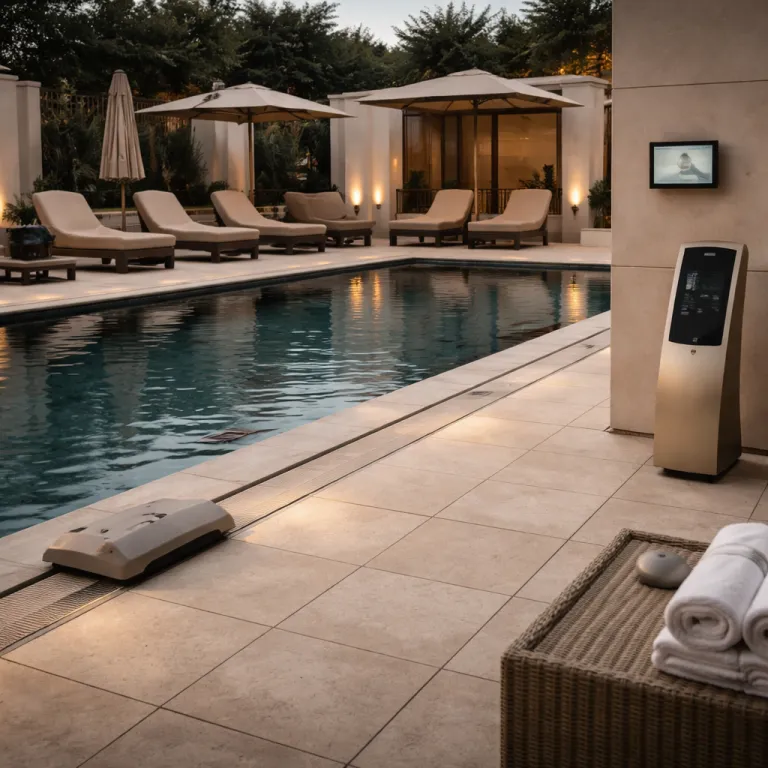
From pool photo to engineered swim: what smart hotel pool technology 2026 really means
The phrase smart hotel pool technology 2026 sounds like marketing until you feel the water hold a perfect 28 °C at midnight. Behind that apparently effortless swim, hospitality teams now rely on layers of connected systems that balance chemistry, filtration and lighting in real time. For guests, the modern hotel pool is becoming less about the dramatic photograph and more about a consistently flawless, low friction experience that quietly enhances wellbeing.
Across luxury hotels, intelligent control platforms now monitor every swimming pool and pool spa with sensors that feed data into central management dashboards. These hospitality technology systems analyse temperature, pH, turbidity and usage patterns, then adjust pumps, heaters and dosing units without a single manual intervention from a guest or a lifeguard. In practice, this kind of hotel technology reduces downtime, improves operational efficiency and helps teams stay ahead of maintenance issues that once closed pools for hours at a time.
For the business leisure traveller extending a work trip, the impact is tangible in the guest room and at the water’s edge. You might set your preferred pool temperature and lighting profile in the hotel app, then find the in-room tablet confirming your lane reservation and pool spa slot within seconds. This is where smart hotel pool technology 2026 stops being an abstract hospitality tech trend and becomes a personal ritual that supports recovery between meetings, red-eye flights and late checkouts.
The invisible layer: AI water quality, security and the new standard of calm
AI driven water quality monitoring is the quiet hero of smart hotel pool technology 2026, especially for sensitive swimmers and families. Smart sensors now sample water every few seconds, feeding data into hotel tech platforms that adjust chlorine, bromine and filtration cycles before a human eye would notice cloudiness. For guests, that means fewer chemical spikes, less irritation and a more stable experience whether you swim at 06:00 or 22:00.
These systems also transform security in hotels, particularly at large resort pools where lifeguard teams face labor shortages and complex layouts. Computer vision cameras can track motion patterns, flag unusual stillness and alert hotel security teams within seconds, while respecting privacy by analysing silhouettes rather than identifiable faces. In many modern hotels, AI alerts reach both the pool attendant and the central operations hub, cutting response time to a critical minute when a child slips or a swimmer shows signs of distress.
Security extends beyond the waterline, as integrated hospitality technology now links access control, CCTV and pool gate sensors into unified management systems. When a guest room keycard is reported lost, access to the pool area can be revoked instantly, reducing the risk of unauthorised entry during a hotel stay. In destinations where pool parties and late night events are part of the draw, such as the best Las Vegas hotel pool scenes highlighted in our guide to luxurious Las Vegas pool stays, this blend of smart security and hospitality tech keeps the atmosphere relaxed without feeling watched.
Personalised pool rituals: from temperature profiles to shade, towels and F&B
The most interesting aspect of smart hotel pool technology 2026 is not the gadgetry but the way it reshapes your personal swim ritual. Modern hotel platforms now treat the pool as an extension of the guest room, using hospitality technology and AI to remember preferences across stays. If you always request a quiet lane at 07:30 and a lounger in partial shade, the system will start offering that pattern before you even tap the app.
On the surface, you simply open the hotel app or in-room tablet and choose a time slot, towel setup and pool spa treatment, then head down when a notification confirms your space. Behind the scenes, hotel technology orchestrates staff schedules, towel inventory, F&B routing and even energy usage, aligning operations so that a chilled drink arrives three minutes after you sit and not twenty. This orchestration enhances guest satisfaction while improving operational efficiency, because the same data that powers your perfect swim also helps hotels forecast demand and reduce waste.
Some modern hotels now integrate AI concierges such as SmartReception, Hospiro Tech or Aara into this pool journey, letting you message a virtual assistant for a late checkout while you read by the water. These AI concierges handle routine requests and upsell opportunities, freeing human staff to focus on high touch moments like adjusting umbrellas or recommending a post swim massage. For travellers comparing properties in destinations like Orlando, our elegant guide to the best hotel pools in Orlando highlights where this level of personalised pool tech is already standard rather than experimental.
AI concierges at the water’s edge: where automation ends and service begins
AI concierges have moved from lobby curiosities to core hospitality tech, and the pool deck is where their value becomes obvious. According to recent industry analysis from Hospitality Technology and Skift, hotels using AI concierges now represent roughly 35 % of surveyed properties, with around a 20 % increase in guest satisfaction reported when these services are deployed and actively managed. One widely used definition captures the shift clearly: "An AI concierge is a virtual assistant that handles guest requests and inquiries using artificial intelligence."
In practice, that means you can message the AI from your lounger to adjust a late dinner reservation, request extra towels to your hotel room or book a pool spa treatment without leaving your chair. For the hotel, every one of these interactions feeds data back into management systems, helping operations teams understand peak times, preferred services and revenue opportunities linked specifically to the swimming pool area. This loop of information allows smart hotel operators to refine staffing, address labor shortages more intelligently and design pool menus that reflect what guests actually order, not what looks good on a brochure.
The best properties use AI concierges as a first filter, not a replacement for human service, especially in the emotionally charged space of the pool where relaxation is non negotiable. When the AI detects frustration, complex requests or high value opportunities, it routes the conversation to a human agent who can step in with nuance and empathy. For discerning travellers, the sign of a truly smart hotel is that you never feel bounced between systems; instead, the technology enhances comfort while staff focus on the moments that matter.
Leaders in quiet innovation: Six Senses, IHG, Marriott and the new modern hotel benchmark
Some brands are already setting the pace for smart hotel pool technology 2026, turning their water spaces into living laboratories for hospitality innovation. Six Senses properties, for example, have long treated the swimming pool as a wellness instrument, and their newer resorts pair mineral rich water with discreet sensors that fine tune temperature and flow. The result is a modern hotel pool that feels almost natural while being meticulously controlled by hotel tech behind the scenes.
Within the IHG portfolio, the appointment of a dedicated AI chief with a mandate for predictive guest personalisation, including poolside micro moments, signals how seriously major groups now treat hospitality technology. When hotel technology teams can anticipate that a frequent business leisure guest will arrive jet lagged and request a quiet evening swim, they can pre assign a room close to the pool, adjust lighting scenes and even pre load the app with suggested time slots. This level of orchestration does not just enhance guest comfort; it also drives revenue by nudging guests toward off peak spa treatments and F&B offers that fit their rhythm.
Marriott Bonvoy properties, particularly in resort heavy markets, are experimenting with robotics and automation to support pool operations without eroding the human feel of service. Robotic cleaners handle overnight pool maintenance, while AI concierges from partners such as SmartReception, Hospiro Tech or Aara manage routine queries that once tied up the front desk. For travellers choosing between modern hotels, the new benchmark is not the flashiest infinity edge but the way technology, from smart hotel platforms to subtle management systems, makes the entire hotel stay feel effortless.
Data, privacy and the future of the hotel swim
Every element of smart hotel pool technology 2026 runs on data, and that raises legitimate questions for privacy conscious travellers. Hospitality operators now track pool usage patterns, preferred times, F&B orders and even how long guests remain in the water, all in the name of operational efficiency and better service. The line between helpful personalisation and intrusive surveillance depends on how transparently hotels communicate what they collect and how they protect it.
Responsible hospitality technology teams anonymise pool related data, aggregate it at segment level and restrict access to only those who need it for operations, security or maintenance. In practice, that means stripping out names and room numbers, replacing them with hashed identifiers, and applying retention rules so that detailed logs are deleted or irreversibly anonymised after a defined period, often 12–24 months. When you read a hospitality report that highlights rising pool usage among business leisure travellers, the underlying datasets should be stripped of personally identifiable information and governed by clear retention policies.
Guests should be able to opt out of non essential tracking without losing access to core services such as safe water quality, basic security in hotels and essential notifications about pool closures. For travellers who care about both design and digital ethics, the smartest move is to ask direct questions before booking, especially when evaluating a smart hotel that promotes advanced pool tech. Check if the hotel uses AI concierges, how long they store interaction logs and whether pool cameras analyse behaviour or simply record for incident review. Our feature on why the pool is becoming the new lobby, available in the article the pool is the new lobby, explores how water spaces now sit at the centre of both design and data strategy in high end hotels.
Key figures shaping smart pools and AI concierges
- According to a recent Hospitality Technology Report, 35 % of surveyed hotels now use AI concierges, indicating that more than one in three properties has automated at least part of its guest messaging and request handling.
- The same hospitality report notes a 20 % increase in guest satisfaction scores at hotels that deploy AI concierge services, suggesting that well designed automation can enhance guest perceptions rather than diminish human service.
- Industry data from global hospitality research and vendor case studies shows that AI and IoT integrations in pool operations can reduce chemical usage by up to 15 %, lowering costs while maintaining consistent water quality for sensitive swimmers.
- In large resort properties, centralised management systems that connect pool sensors, security cameras and staffing schedules have been shown to cut incident response time by several critical minutes compared with manual radio based coordination.
- Hospitality analysts tracking labor shortages estimate that automation of routine pool tasks, such as towel inventory and basic cleaning, can free up to 10–15 % of on site staff time for higher value guest interactions.
FAQ about smart hotel pool technology and AI concierges
What is an AI concierge and how does it affect my pool experience ?
An AI concierge is a virtual assistant that handles guest requests and inquiries using artificial intelligence. At the pool, it can manage lounger reservations, towel requests, F&B orders and spa bookings via chat or app, reducing wait times. Human staff then focus on personalised touches, while the AI handles repetitive tasks in the background.
How do smart pools work in luxury hotels ?
Smart pools use IoT devices to monitor and adjust water quality, temperature and lighting automatically. Sensors send data to central management systems, which control pumps, heaters and dosing units without manual intervention. This keeps the swimming pool consistently comfortable and safe throughout the day, even during peak usage.
Are AI concierges replacing human staff at the pool ?
AI concierges assist human staff by handling routine tasks, allowing staff to focus on personalised guest interactions. In practice, that means fewer queues at the pool desk and faster responses to simple requests like extra towels or snack orders. Hotels still rely on human teams for safety, complex service and emotional intelligence.
Should I be concerned about data privacy when using smart pool features ?
Smart pool systems collect operational data such as usage times, temperature settings and service orders to improve efficiency and guest experience. Responsible hotels anonymise this information, limit access and explain clearly what is tracked and why. If privacy is a priority, you can ask the property how long they retain pool related data and whether you can opt out of non essential analytics.
How can I check if a hotel offers smart pool and AI concierge services before booking ?
You can review the hotel technology section of the property website, then contact the hotel directly to ask about AI concierge availability and smart pool features. Questions about app based pool reservations, water quality monitoring and digital F&B ordering will quickly reveal how advanced their systems are. For high stakes business leisure trips, this extra five minute check can make the difference between a crowded, frustrating pool and a genuinely restorative swim.