Sustainable luxury hotel pool design for eco‑conscious couples
The hidden cost of the perfect pool view
Luxury travelers love a hotel pool that feels like a private lagoon. Yet behind that perfect view lies a resource-hungry swimming system that quietly shapes the environment. For couples planning their next stay, understanding sustainable pool hotel design is now as essential as choosing the right rooms.
A typical resort swimming pool in a hot, dry climate can lose around 3 to 5 percent of its volume every day through evaporation, according to engineering guidance from the U.S. Department of Energy and the National Renewable Energy Laboratory (for example, NREL’s Solar Pool Heating technical reports and DOE’s Energy Saver pool efficiency guidance). That loss drives constant top-ups, higher energy use for pumping and filtration, and more chemicals in the water and surrounding environment. When multiplied across every luxury hotel on a coastline, the impact on local water tables and marine life becomes impossible to ignore for any guest who cares about sustainability.
Research summarized by the UN World Tourism Organization in reports such as Climate Change and Tourism: Responding to Global Challenges and the UNWTO Tourism and Climate Change update suggests that the accommodation sector is responsible for a substantial share of tourism’s roughly 5 percent contribution to global CO₂ emissions, and pools are a visible part of that footprint. Heating, pumping, lighting, and filtering a large open-air pool or rooftop pool can quietly consume more energy than many guest rooms combined. In conventional systems, it is common for pool circulation and heating to require several kilowatt-hours of electricity per cubic meter of water each month, depending on climate, operating hours, and whether the pool is heated year-round. Saline systems reduce chemical use by 50 to 70 percent, based on manufacturer data and case studies cited in DOE and NREL efficiency guidance, but they demand more electricity for salt chlorination, so the design challenge is to balance eco-friendly technology with renewable power.
Forward-thinking properties now treat the pool as a key piece of architecture design rather than a decorative afterthought. New resort projects in water-stressed regions increasingly plan water and energy systems where the pool, spa, and landscape irrigation are conceived as one integrated hotel eco network, often supported by on-site solar and smart controls. This kind of creative planning turns the pool from a liability into a living demonstration of eco luxury that guests can actually see and feel.
For couples, the question is no longer whether a luxury hotel has a pool bar and cabanas. The real question is whether that swimming pool respects the local community and natural resources as much as it flatters your Instagram feed. Sustainable pool hotel design asks you to look beyond the tranquil surface and consider how the water got there, how it is treated, and what happens when it drains away.
When luxury feels honest: real progress versus greenwashed water
Some properties are finally proving that sustainability and sensual guest experience can coexist in the same shimmering blue rectangle. At several European and Middle Eastern resorts, operators have worked with natural pool specialists such as Biotop to create “Living Pools” that use biological filtration instead of heavy chemicals, turning the swimming area into a piece of aquatic landscape design. This is sustainable pool hotel design as quiet revolution rather than marketing slogan.
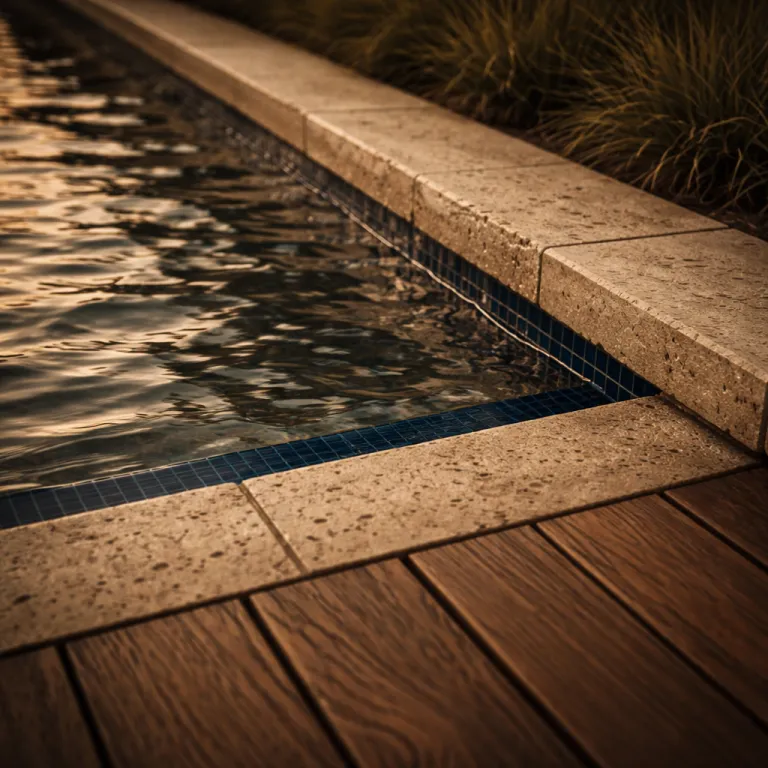
In these naturally filtered pools, the water often feels softer on the skin, the surrounding greenery thrives on carefully managed irrigation, and the pool edge becomes a tranquil threshold between the wider landscape and the hotel. Guests move from their selected guest rooms to the deck and sense that the environment is being cared for, even if they never read a single sustainability report. That is the kind of intuitive eco luxury that couples remember long after checkout.
Resorts in arid destinations such as Oman and the United Arab Emirates now frequently treat wastewater onsite and reuse greywater for landscape irrigation, reducing pressure on scarce local supplies. In the most advanced examples, the swimming pool is not an isolated amenity but part of a wider system that includes natural ventilation, passive cooling, and renewable energy, all designed to protect the surrounding community. When industry surveys such as the Booking.com Sustainable Travel Report 2023 indicate that 80 percent of global travelers say traveling more sustainably is important to them and 76 percent want to stay in sustainable properties at least once in the coming year, these details become commercial advantages as well as ethical choices.
Contrast that with the many properties that talk about being a friendly hotel for the planet while running oversized pools with no shading, inefficient pumps, and vague promises about offsetting. They might mention a design hotel philosophy or sprinkle the word eco-friendly across the privacy policy page, yet offer no hard data on water use per guest or energy sources. This is where greenwashing thrives, especially when the architecture design is spectacular enough to distract from the numbers.
True transparency means publishing pool-specific metrics, explaining filtration choices, and showing how interior architecture and landscape planning reduce evaporation and chemical loads. It also means acknowledging trade-offs, such as the extra energy required for salt chlorination, and then addressing them with solar panels or other renewable systems. As sustainability expert Dr. Susanne Becken has argued in her work on tourism emissions, “what gets measured gets managed” — and couples who value authenticity should reward the hotels that share this level of detail and quietly sidestep those that rely on mood boards instead of measurable change.
One spectacular pool or fifty plunge pools ? Rethinking the romantic swim
For couples, the fantasy is often a private swimming pool attached to their suite, hidden from other guests and framed by lush greenery. That image sells quickly on any luxury booking website, but it rarely aligns with sustainable pool hotel design in practice. Every additional plunge pool multiplies water use, pumping, heating, and maintenance, even when the design looks compact and efficient.
From an environmental perspective, one thoughtfully scaled main pool can be far more responsible than dozens of small basins scattered around the property. A single body of water allows the hotel to invest in higher quality filtration, smarter interior design of plant rooms, and renewable-powered heating that would be uneconomical for many tiny pools. It also concentrates the impact on one area, making it easier to integrate natural shading, wind protection, and open-air ventilation that reduce evaporation and energy demand.
The trade-off is privacy, which matters deeply to couples seeking a romantic escape and a tranquil swim. Here, architecture design and interior architecture become the key tools for reconciling intimacy with shared resources, using terraced decks, planted screens, and staggered levels to create semi-private zones around a central swimming pool. When done well, the guest experience can feel as exclusive as a private villa while using a fraction of the water and energy.
GS DESIGN’s work on the Lanxi Tangquan Bubble Pool Hotel in Shenzhen, widely discussed in design media, shows how creative geometry can carve out intimate pockets around a communal pool. Curved walls, carefully placed openings, and sculptural forms shape the view lines so that each guest feels cocooned, even in a shared space. This is design culture applied to sustainability, where the art of space making directly reduces the need for resource-heavy features like multiple heated plunge pools.
Couples should read between the lines when a luxury hotel markets endless private pools as the ultimate indulgence. Ask whether a smaller number of beautifully designed shared pools, perhaps including a rooftop pool with shaded cabanas and a quiet pool bar, might offer a richer experience with less environmental cost. On our own guide to elegant hotel pools in urban settings, the most memorable swims often come from one extraordinary shared pool where the edge dissolves into the skyline, not from a series of identical plunge tubs.
What a truly sustainable luxury pool will look like next
The next generation of sustainable pool hotel design will be defined less by labels and more by systems thinking. A genuinely responsible luxury hotel will treat its pools, guest rooms, and landscape as one hydrological and energy ecosystem rather than separate departments. In that model, every swimming pool becomes a visible indicator of how seriously the property takes its commitments to the environment and local community.
Expect to see more properties using solar panels dedicated to pool operations, from pumps to subtle underwater lighting that shapes the nocturnal guest experience. Natural ventilation and passive cooling will be prioritized in the surrounding architecture design, reducing the need for aggressive air conditioning in adjacent rooms and spa areas. Materials will shift toward stone, timber, and finishes with lower embodied carbon, while interior design will favor greenery and shading structures that cool the deck without mechanical systems.
Water management will be the defining test, especially in regions already under stress from tourism. The most advanced hotel eco strategies will combine rainwater capture, greywater reuse for irrigation, and ultra-efficient filtration that minimizes backwash losses, all monitored with clear data. In such properties, the pool bar, cabanas, and open-air lounges will be arranged to support shading and wind protection, not just to frame the perfect sunset view for Architectural Digest style photography.
For couples choosing where to stay, three questions cut through the marketing noise instantly. Ask how much water the pools use per guest night, what percentage of that water is recycled or reused, and whether the energy for heating and pumping comes from renewable sources. Then ask to see how these commitments are reflected in the hotel’s published sustainability information rather than buried in a generic privacy policy that mentions being a friendly hotel without specifics.
Behind all of this lies a simple definition that is worth repeating in full for clarity : “What is a sustainable pool hotel? A hotel that designs its pool area using eco-friendly materials and energy-efficient systems to minimize environmental impact.” “How do sustainable pools benefit the environment? They reduce water and energy consumption, lower carbon emissions, and often use natural filtration systems.” “Are sustainable pool hotels more expensive? Initial costs may be higher, but they often lead to long-term savings and attract eco-conscious travelers.” A frequently cited example is the Six Senses Fiji resort, which reported after installing extensive solar generation, battery storage, and high-efficiency water systems that it could meet close to 100 percent of its energy demand from renewables on many days while cutting diesel use and reducing freshwater abstraction per guest night compared with its pre-renovation baseline.
Key figures shaping sustainable pool hotel design
- Analyses by the UN World Tourism Organization, including Climate Change and Tourism: Responding to Global Challenges, indicate that tourism contributes roughly 5 percent of global CO₂ emissions, with accommodation and resort infrastructure — including pools — forming a major share, which makes energy-efficient pool systems a critical lever for emissions reduction.
- Between 3 and 5 percent of a resort pool’s water volume can evaporate daily in warm climates, according to engineering estimates from the U.S. Department of Energy’s Energy Saver guidance and National Renewable Energy Laboratory pool performance studies, forcing constant refilling and higher treatment needs, so shading, wind protection, and smart design directly translate into measurable water savings.
- Saline pool systems can cut chemical use by roughly 50 to 70 percent compared with traditional chlorination, based on manufacturer data and pool industry case studies referenced in DOE and NREL efficiency materials, but they require more electricity for salt chlorination, which means pairing them with renewable energy is essential to avoid shifting the environmental burden.
- Surveys such as the Booking.com Sustainable Travel Report 2023 indicate that 80 percent of travelers say traveling more sustainably is important to them and 76 percent want to stay in sustainable accommodations in the coming year, and this growing demand is pushing luxury properties to treat pool sustainability as a core part of the guest experience rather than an optional extra.
- Industry analysis of certified properties, including UNWTO and Global Sustainable Tourism Council case studies, shows that a significant share of travelers already choose stays with recognized sustainability labels, a trend that is particularly strong among couples with mid to high budgets who expect eco luxury features to be integrated into pool and spa design rather than added as superficial gestures.
References
- UN World Tourism Organization (UNWTO) publications on tourism-related carbon emissions and accommodation sector impacts, including Climate Change and Tourism: Responding to Global Challenges and subsequent tourism and climate briefs.
- Booking.com Sustainable Travel Report 2023, global traveler attitudes to eco-friendly and certified stays, including quantified preferences for sustainable accommodations.
- Technical guidance from the U.S. Department of Energy’s Energy Saver resources and National Renewable Energy Laboratory reports on pool evaporation, heating loads, and energy-efficient circulation systems, including solar pool heating performance studies.