Reading luxury hotel pool design details 2026 in a single glance
Stand at the edge of any hotel pool and pause. In those first seconds, your eye reads the luxury hotel pool design details 2026 that will define every swim, from the edge line to the way the water meets the sky. Train that glance and you immediately sense whether the pool feels considered or simply convenient.
Design literate travelers know that the best pools are not about size but about how the pool, the surrounding outdoor space and the landscape speak to each other. Look at how the swimming pool sits in relation to the hotel façade, the rooms suites above and the wider resort grounds, then notice whether the outdoor spaces invite you to linger before and after swimming. When those relationships feel effortless, you are usually looking at a property where hotel architects, interior designers and construction teams have worked as a single équipe rather than in silos.
Start with the edge of the hotel pool, because that single design decision shapes everything else. A classic raised coping creates a clear boundary between water and deck, while a vanishing edge or infinity pool pulls your gaze outward and dissolves the line between pool and horizon. When you compare pools across a luxury resort portfolio, you will see how these edge treatments quietly signal whether the experience is about introspective spa calm, social outdoor living or dramatic views that compete with the sea.
Edge treatments decoded: from vanishing edges to perimeter overflow
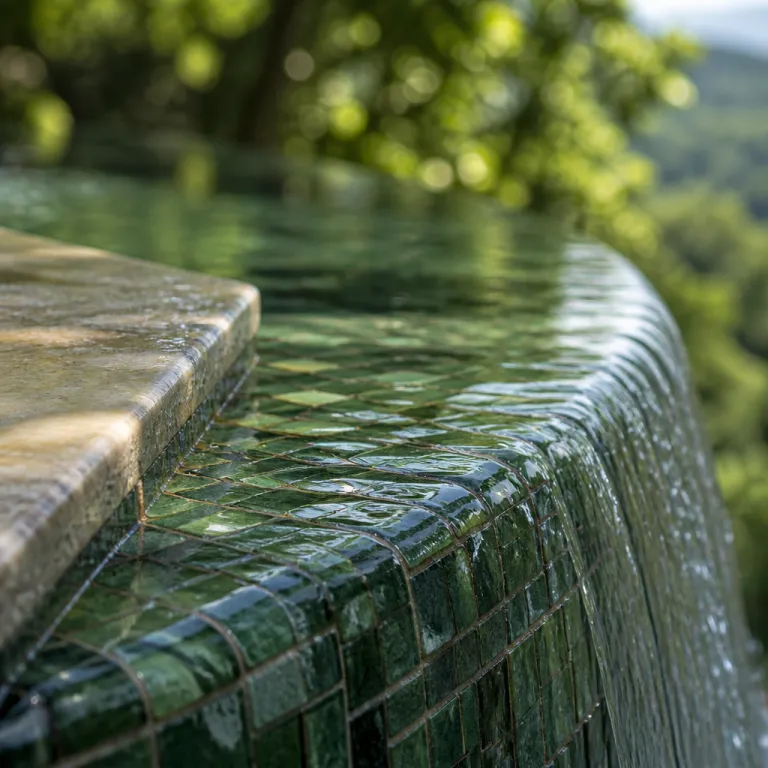
Infinity edges dominate luxury hotel pool design details 2026, but not all are equal. A true infinity pool uses a vanishing edge where water flows over one or more sides into a hidden trough, and the best examples align that edge precisely with a distant line of sea or lake. When this geometry is off by even a few centimetres, the illusion breaks and the pool feels more like a visual trick than a seamless extension of the landscape.
Design trends now go beyond the classic infinity pool to knife edge and perimeter overflow systems. In a knife edge pool design, the deck and water sit almost flush, so the swimming pool appears as a calm sheet of water with barely visible boundaries, which works beautifully in modern pool courtyards and urban rooftop outdoor spaces. Perimeter overflow pools send water over every side into a continuous slot, creating a mirror like surface that suits grand resort pool settings where architecture, lighting and reflections are part of the evening theatre.
For travelers comparing pools on a booking website, it helps to decode the language in descriptions and renderings. A vanishing edge pool is technically “a pool where water flows over one or more edges, creating a visual effect of water with no boundary”, and that definition matters when you are choosing between a cliffside resort pool and a quieter courtyard pool spa. Before you trust any dramatic rendering, read a design focused guide such as how to read past the renderings of spectacular pools, then cross check guest photos to see whether the real water features and edge lines live up to the promise.
Materials, water colour and the quiet power of mosaic tiles
Once you understand the edge, look down into the water and read the materials. Luxury hotel pool design details 2026 lean heavily on natural stone, porcelain and glass mosaic tiles, each changing the colour and feel of the swimming pool in distinct ways. Pale limestone or travertine around an outdoor pool keeps the deck cool underfoot, while darker basalt or slate can make the water feel deeper and more dramatic.
Inside the pool, the choice between large format tiles and small mosaics is not just aesthetic. Mosaic tiles follow curves, catch light differently and allow hotel architects and interior designers to create gradients that shift from pale aqua on tanning ledges to inky blue in deeper plunge pools, which subtly guides swimmers toward different zones. As one verified expert explanation puts it, “They offer durability, aesthetic appeal, and can create intricate designs.”
Look at COMO Le Beauvallon on the Riviera, where a glittering mosaic tiled luxury pool acts as the visual centerpiece of the entire resort pool terrace. The way the tiles refract late afternoon lighting turns the water into a moving jewel, and that sensory richness is what separates a memorable swim from a standard hotel pool experience. When you browse photos on a booking platform, zoom in on tile joints, grout colour and transitions between shallow and deep areas, because these small design features often reveal whether the property has invested in long term quality or short term visual impact.
Floating pools, suspended decks and pools that belong to the landscape
Floating pools and suspended designs are no longer engineering novelties reserved for concept resorts. The Lake Como EDITION signals a new chapter in luxury hotel pool design details 2026 with its one of a kind floating pool on the lake, where the swimming experience is defined as much by the gentle movement of water beneath the platform as by the mountain views. According to the expert dataset, “Pools built on floating platforms, often in bodies of water, providing unique swimming experiences” are now a recognised category rather than a marketing flourish.
Suspended pools, whether bridging two wings of a hotel or projecting from a high rise façade, rely on similar structural ambition. These modern pool statements work when the glass or acrylic sides frame the landscape and when the outdoor space around them feels calm enough that you can actually enjoy the sensation of swimming above a city or bay. When they fail, it is usually because the surrounding outdoor spaces are cluttered with furniture, signage and spa cabanas that distract from the purity of the water experience.
The most quietly successful trend, though, is not spectacle but integration. At Mandarin Oriental Punta Negra in Mallorca, three outdoor pools and one indoor pool are woven into landscaped terraces so that each swimming pool feels like a natural extension of the terrain rather than an object placed on top of it, and this approach reflects a broader shift toward sustainable pool designs and the use of local materials. If you are planning a business leisure stay and want more context on how these choices affect your trip planning, guides such as where to lock in rates before peak pool season can help you match design ambitions with booking strategy.
Depth, dimension and how different pools shape the way you swim
Depth is one of the most overlooked luxury hotel pool design details 2026, yet it dictates how you will actually use the water. A resort pool that ranges gently from a shallow tanning ledge to a mid depth lap zone and then to a deeper plunge area offers three distinct swimming experiences in one footprint. By contrast, a uniform depth outdoor pool may photograph well but often feels monotonous after a single day.
Look for diagrams or descriptions that specify depth changes, especially if you plan to swim laps before meetings or share the pool with family. Tanning ledges, those broad shallow shelves where you can place loungers partially in the water, have become a defining feature of many modern pool designs because they bridge the gap between spa style relaxation and active swimming. When these ledges are paired with adjacent plunge pools or smaller pool spa corners, the overall outdoor living experience becomes more layered and more comfortable for mixed groups.
Depth also shapes acoustics and privacy. Deeper sections absorb sound and can make a crowded resort pool feel calmer, while shallower areas near the hotel bar or café tend to amplify conversation and music, which may suit social travelers but not those seeking quiet. If you are sensitive to noise, choose rooms suites that overlook the calmer end of the swimming pool or select a property where the main hotel pool is complemented by a separate adults only outdoor space dedicated to spa level quiet.
From backyard inspiration to florida resorts: what travelers and homeowners now expect
The line between high end residential pool design and luxury resort pool thinking has blurred. Homeowners now look to hotel pool trends for ideas on how to create cohesive outdoor living environments, while hotel architects borrow from sophisticated backyard layouts that treat the swimming pool, dining terrace and lounge areas as one continuous outdoor space. This cross pollination explains why you now see resort style water features, fire elements and integrated seating appearing in private villas and, conversely, why many florida resorts feel more like expansive private estates than traditional hotels.
In luxury hotel pool design details 2026, the pool is rarely a standalone rectangle at the edge of the property. Instead, it anchors a sequence of outdoor spaces that might include shaded cabanas, semi private pool spa courtyards for certain rooms suites and year round usable terraces that extend the spa and fitness narrative beyond the building envelope. For travelers, this means that the quality of the stay is defined as much by how you move between indoor and outdoor spaces as by the number of pools on the amenities list.
If you are planning a trip that mixes meetings with downtime, pay attention to how a property photographs its outdoor pool and surrounding decks. A well considered luxury pool will show clear circulation paths, varied seating types and lighting that supports both daytime swimming and evening ambiance, while a more generic resort pool often feels like a single large basin surrounded by identical loungers. For a sense of how this plays out in a specific urban context, look at curated guides such as an elegant guide to the best hotel pools in St Louis, which evaluate not only the water itself but the full outdoor living experience.
The 30 second read: how to assess any hotel pool like a design insider
When you arrive at a new hotel, give yourself a 30 second audit of the pool area before you unpack your swimwear. First, stand back and read the overall design: does the swimming pool sit comfortably within the resort architecture, and do the surrounding outdoor spaces feel coherent rather than cluttered. If the pool feels like an afterthought, squeezed between service buildings or overshadowed by parking, you already know that the water will not be the emotional heart of the stay.
Next, walk to the edge and look down at the water colour, tile choice and edge treatment. Luxury hotel pool design details 2026 reward this close reading, because the best properties use materials and lighting to create a specific mood, whether that is spa calm, social energy or contemplative quiet. Check for thoughtful features such as tanning ledges, integrated steps, accessible entries and clearly defined zones for laps, lounging and children, which indicate that the hotel architects and construction teams have considered different types of swimmers.
Finally, imagine the pool at three key moments: early morning laps, a midday break between meetings and an evening drink by the water. Ask yourself whether the lighting, seating and proximity to rooms suites will support those rituals in a way that feels effortless rather than forced. If the answer is yes, you are likely standing beside a hotel pool where design, engineering and hospitality have aligned to create an outdoor pool experience that will stay with you long after you check out.
Key figures shaping luxury hotel pool design
- Approximately 60 % of luxury hotels now feature some form of infinity pool, according to Hospitality Design Magazine, reflecting how vanishing edges have moved from niche design to mainstream expectation.
- Unique pool designs, including floating pools, dramatic water features and integrated outdoor living zones, have been linked to a 15 % increase in bookings in competitive markets, as reported by Hotel Management Journal.
- Design focused travelers increasingly research hotel amenities, check pool features and read guest reviews before booking, which pushes hotels to invest in more sophisticated pool designs and year round usable outdoor spaces.
- Global hospitality projects now routinely involve partnerships between architectural firms, design studios and construction companies, using advanced design software and construction techniques to create complex resort pool geometries and suspended pools.
- Sustainable pool designs that integrate with natural landscapes and use local materials are gaining share in new luxury developments, aligning guest expectations with environmental performance and long term maintenance efficiency.
FAQ about luxury hotel pool design details 2026
What is a vanishing edge pool and how is it different from a standard infinity pool ?
A vanishing edge pool is defined as “a pool where water flows over one or more edges, creating a visual effect of water with no boundary”. In practice, most infinity pools use this principle on at least one side, but the best examples align that edge precisely with a distant horizon line. When evaluating photos, look for a clean, uninterrupted edge and a catch basin that is visually discreet, because exposed gutters can break the illusion.
Why do so many luxury hotels use mosaic tiles in their pools ?
Mosaic tiles allow hotel architects and interior designers to follow curves, create gradients and introduce subtle patterns that would be impossible with large format tiles. They are also durable under heavy resort pool use and can be repaired in small sections, which is crucial for properties that operate year round. In high end pools, mosaics are often used to differentiate shallow tanning ledges, spa corners and deeper plunge zones through shifts in colour and reflectivity.
What exactly are floating pools in a hotel context ?
Floating pools are structures built on engineered platforms that sit on top of natural bodies of water such as lakes, rivers or sheltered bays. In a hotel setting, they offer the sensation of swimming in open water with the comfort and safety of a controlled swimming pool environment. The Lake Como EDITION is a leading example, where the floating pool extends the resort’s outdoor living area directly onto the lake without disturbing the shoreline.
How can I quickly judge whether a hotel pool is well integrated with its landscape ?
Look at how the pool aligns with natural contours, existing trees and views rather than with parking lots or service roads. A well integrated luxury pool will use local stone, planting and lighting to make the outdoor space feel like a natural extension of the terrain, with paths that flow easily between rooms suites, spa areas and dining terraces. If the pool deck feels isolated or overbuilt, the design likely prioritised construction convenience over landscape harmony.
Are the latest hotel pool trends relevant for homeowners planning a backyard pool ?
Yes, many luxury hotel pool design details 2026 translate directly to high end residential projects. Homeowners can borrow ideas such as shallow tanning ledges, integrated seating, perimeter overflow edges and cohesive outdoor living layouts that connect the swimming pool to dining and lounge areas. Studying resort pool case studies is a practical way to understand how features, lighting and water depth variations can create a backyard pool that feels both luxurious and functional.